

Table of Contents
ToggleBusiness masterclass trends 2026 are reshaping how professionals learn, grow, and stay competitive. The days of sitting through day-long seminars with generic PowerPoint slides are fading fast. Today’s learners want flexibility, personalization, and real results.
The professional development market has shifted dramatically. Companies now invest in targeted training that delivers measurable outcomes. Employees demand learning experiences that fit their schedules and address their specific skill gaps. This creates a perfect storm for innovation in business masterclass formats.
What does this mean for professionals planning their development in 2026? The answer involves AI, micro-content, soft skills, immersive tech, and hyper-personalized programs. Here’s what’s coming, and how to prepare.
Key Takeaways
- Business masterclass trends 2026 are driven by AI-powered platforms that create personalized, adaptive learning paths for each professional.
- Microlearning formats of 5-15 minutes are replacing long seminars, allowing busy professionals to learn on-demand during their workday.
- Soft skills training—including communication, leadership, and resilience—is seeing major investment as companies recognize their impact on long-term success.
- VR and AR technologies enable immersive simulations where professionals can safely practice high-stakes scenarios before real-world situations.
- Niche, industry-specific masterclass offerings are replacing generic programs, delivering targeted content based on role, industry, and career stage.
- Hybrid learning formats that combine in-person workshops with virtual coaching provide both relationship-building and flexibility benefits.
The Rise of AI-Powered Learning Experiences
AI is transforming business masterclass trends 2026 in ways that seemed futuristic just a few years ago. Machine learning algorithms now assess each learner’s strengths, weaknesses, and preferred learning styles. The result? Custom-built curricula that adapt in real time.
These AI-powered platforms track progress and adjust difficulty levels automatically. If a learner struggles with financial modeling, the system offers additional practice modules. If they excel at strategic planning, it moves them forward faster. This creates efficient learning paths that respect everyone’s time.
Chatbots and virtual tutors provide 24/7 support. Professionals can ask questions at 2 AM and receive instant, intelligent responses. This eliminates the frustration of waiting for instructor feedback.
Several major platforms now use AI to match learners with instructors based on industry background, career goals, and communication preferences. This matching process increases engagement and completion rates significantly.
AI also powers sophisticated analytics dashboards. Organizations can track ROI on their training investments with precision. They see exactly which business masterclass programs drive performance improvements and which fall flat.
Microlearning and On-Demand Masterclass Formats
Long-form courses are losing ground to bite-sized content. Business masterclass trends 2026 show a clear preference for microlearning modules that take 5-15 minutes to complete.
Why the shift? Professionals are busy. They squeeze learning into commutes, lunch breaks, and the quiet moments between meetings. A three-hour webinar doesn’t fit this reality. A focused 10-minute lesson on negotiation tactics does.
On-demand access matters more than ever. Learners want to pull up content when they need it, right before a client presentation or during a challenging project. This “just-in-time” approach to business masterclass content delivers practical value at the moment of need.
Mobile-first design has become standard. The best platforms optimize every video, quiz, and interactive element for smartphone screens. Professionals learn on their phones during airport layovers or while waiting for coffee.
Content creators are responding by breaking complex topics into modular series. A leadership development masterclass might include 20 standalone lessons that learners consume in any order. Each module addresses a specific skill or scenario.
This format also supports better retention. Research consistently shows that spaced repetition beats marathon study sessions. Short, frequent learning sessions create stronger neural pathways than occasional deep dives.
Emphasis on Soft Skills and Leadership Development
Technical skills matter, but business masterclass trends 2026 reveal a major investment in soft skills training. Companies recognize that emotional intelligence, communication, and adaptability drive long-term success.
Leadership development programs are expanding beyond the C-suite. Organizations now train mid-level managers and high-potential individual contributors in leadership fundamentals. They’re building deeper benches of capable leaders.
Communication skills rank among the most requested business masterclass topics. This includes presentation skills, written communication, difficult conversations, and cross-cultural collaboration. Remote and hybrid work environments have made clear communication more valuable than ever.
Conflict resolution and negotiation training sees strong demand. Professionals want practical frameworks they can apply immediately. Role-playing exercises and scenario-based learning help them practice before high-stakes situations.
Resilience and stress management courses attract growing enrollment. The past few years tested everyone’s mental fortitude. Forward-thinking companies provide their teams with tools to manage pressure and avoid burnout.
Creativity and innovation workshops help teams generate better ideas. These programs teach structured approaches to brainstorming, prototyping, and testing new concepts. They break the myth that creativity is an innate talent rather than a trainable skill.
Hybrid and Immersive Learning Technologies
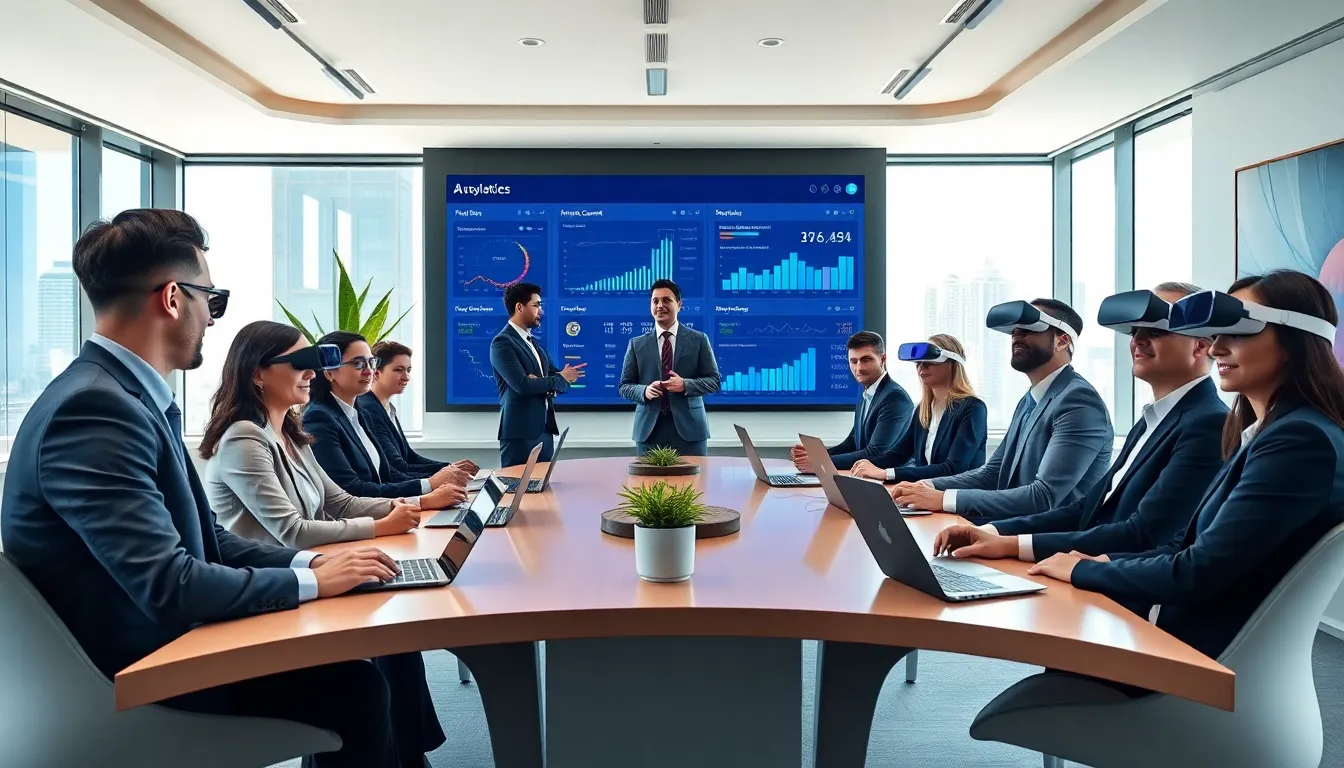
Business masterclass trends 2026 include significant adoption of hybrid and immersive technologies. Virtual reality (VR) and augmented reality (AR) create experiences that textbooks and videos simply cannot match.
VR simulations let professionals practice high-stakes scenarios safely. Sales teams rehearse difficult client meetings. Managers handle simulated employee conflicts. Executives practice crisis communication. These immersive exercises build muscle memory and confidence.
AR overlays add digital information to real-world environments. A business masterclass on supply chain management might use AR to visualize inventory flows in a learner’s actual workplace. This connection between theory and practice accelerates understanding.
Hybrid formats blend in-person and virtual components. A masterclass might include one intensive workshop day followed by six weeks of online modules and virtual coaching sessions. This structure delivers the relationship-building benefits of face-to-face interaction plus the convenience of remote learning.
Live virtual sessions with real-time interaction remain popular. They create accountability and community without requiring travel. Breakout rooms enable small group discussions that feel surprisingly personal.
The technology keeps getting more accessible. VR headsets cost a fraction of what they did five years ago. Many AR experiences work through standard smartphones. These lower barriers open immersive business masterclass options to smaller organizations.
Personalized and Niche Masterclass Offerings
Generic programs are giving way to highly specialized content. Business masterclass trends 2026 show strong growth in niche offerings that address specific industries, roles, and career stages.
Industry-specific masterclasses address unique challenges. A business masterclass for healthcare executives differs substantially from one designed for fintech founders. The case studies, regulations, and competitive dynamics require specialized attention.
Role-based programs have gained traction. First-time managers need different content than seasoned directors. Individual contributors benefit from programs that address their particular challenges without assuming leadership responsibilities.
Career stage matters too. Early-career professionals want skill-building fundamentals. Mid-career learners seek strategic thinking and influence skills. Senior leaders need peer networks and fresh perspectives on emerging challenges.
Personalization extends to learning format preferences. Some professionals absorb information best through video. Others prefer reading or interactive exercises. Smart business masterclass platforms offer the same content in multiple formats.
Assessment-driven customization has become standard. Learners complete diagnostic evaluations before starting. The platform then recommends specific modules based on identified gaps. This prevents wasted time on already-mastered material.
Cohort-based programs create community among peers facing similar challenges. Professionals learn from each other’s experiences while building valuable networks. These connections often outlast the formal program.


